Why HND to BSc Conversion Programmes Were Stopped in Nigeria
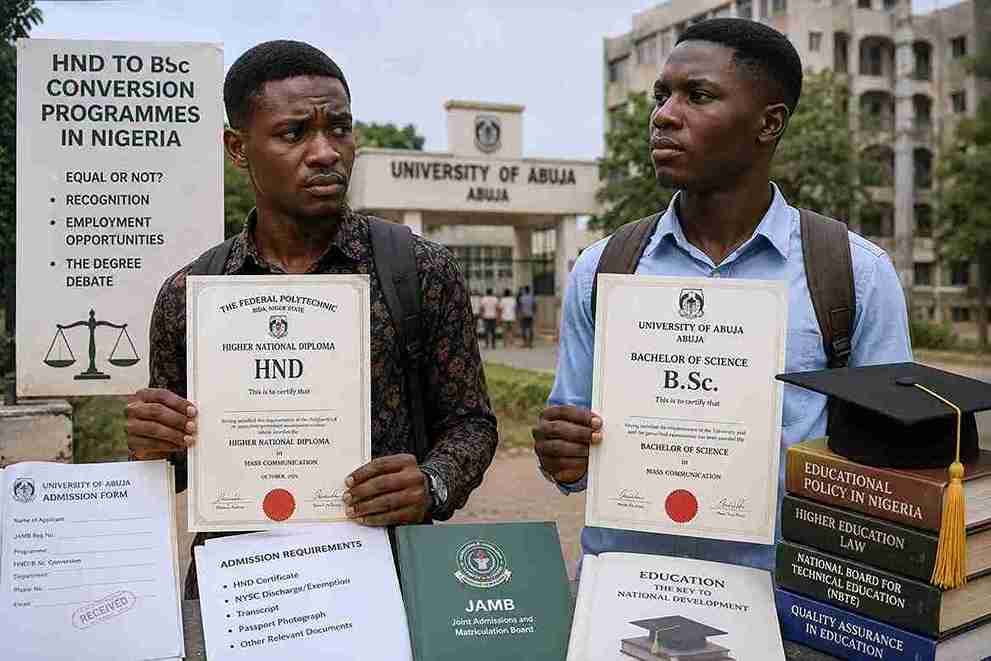
The recent reports about the discontinuation of HND to BSc conversion programmes in Nigeria have generated serious reactions among students, graduates, parents, and education stakeholders. Many Nigerians became confused after hearing claims that the Registrar of the Joint Admissions and Matriculation Board (JAMB), Professor Is-haq Oloyede, stopped HND conversion programmes across Nigerian universities.
However, the issue is more complex than many people think. The development mainly involves policies and directives associated with the National Universities Commission (NUC), which regulates university education in Nigeria.
For many years, Higher National Diploma (HND) holders relied on conversion or “Top-Up” degree programmes to upgrade their qualifications to Bachelor of Science (BSc) degrees. These programmes became popular because of the long-standing HND and BSc dichotomy in Nigeria.
This article explains what HND conversion programmes are, why some universities reportedly stopped them, the role of JAMB and NUC, and what the situation means for Nigerian students.
What is an HND to BSc Conversion Programme?
HND to BSc conversion programmes, also known as “Top-Up” programmes, are special university admission pathways designed for graduates of polytechnics who already possess Higher National Diplomas.
These programmes allow HND holders to study for a shorter period in a university and eventually obtain a BSc degree instead of starting a full undergraduate programme from the beginning.
The programmes became increasingly popular because many employers and institutions in Nigeria still treat BSc holders differently from HND holders despite years of public debate.
The HND and BSc Dichotomy in Nigeria
One major reason many students enrolled in conversion programmes is the continued discrimination between HND and BSc qualifications in Nigeria.
Although polytechnics are designed to provide technical and practical education, HND graduates often complain about:
- Limited promotion opportunities
- Employment discrimination
- Salary differences
- Restrictions in certain government jobs
- Difficulty pursuing postgraduate studies in some institutions
Because of these challenges, many HND holders viewed conversion programmes as an opportunity to improve their career prospects and gain equal recognition.
Did Professor Oloyede Personally Stop HND Conversion?
There is no official evidence showing that Professor Is-haq Oloyede personally banned HND to BSc conversion programmes nationwide.
Professor Oloyede serves as the Registrar of the
Joint Admissions and Matriculation Board (JAMB), which mainly oversees admission processes into tertiary institutions in Nigeria.
Reports indicate that the major directives regarding the discontinuation of some conversion programmes came from the
National Universities Commission (NUC).
The NUC is responsible for regulating university education, approving academic programmes, and ensuring universities comply with national educational standards.
Why Were Some Conversion Programmes Stopped?
Several reasons have been linked to the reported discontinuation of some HND to BSc conversion programmes in Nigeria.
1. Quality Control Concerns
One of the major concerns reportedly raised by regulators involves academic quality control. Some universities were accused of operating conversion programmes without proper regulation or standard admission procedures.
Authorities reportedly became concerned that some institutions were using the programmes mainly as revenue-generating schemes instead of maintaining proper academic standards.
2. Irregular Admission Pathways
Education regulators also reportedly expressed concerns about irregular admission methods associated with some Top-Up programmes.
In some situations, candidates allegedly gained admission into programmes without passing through approved national admission procedures.
3. NYSC Mobilization Issues
Another issue linked to some conversion programmes involves the National Youth Service Corps (NYSC).
Some graduates reportedly faced difficulties during NYSC mobilization because of concerns surrounding admission records, programme approval, or irregular academic structures.
Students are therefore advised to always verify whether any programme they apply for is officially recognized and approved.
4. Compliance with NUC Regulations
Some universities reportedly suspended or discontinued their Top-Up programmes after receiving directives or guidance from the NUC regarding compliance with university education standards.
This reportedly affected certain institutions offering HND conversion programmes across Nigeria. Read also: Full details on 2026 Jamb Policy meeting
What This Means for HND Holders
The reported discontinuation of some conversion programmes has created uncertainty among many HND graduates who hoped to upgrade to BSc qualifications.
Many students believe the development may worsen the already existing HND and BSc discrimination in Nigeria.
Critics argue that instead of restricting conversion opportunities, the government should focus on:
- Improving polytechnic education
- Granting equal recognition to HND and BSc certificates
- Upgrading polytechnics into universities of technology
- Creating fair employment opportunities for all graduates
Is HND Still Valuable in Nigeria?
Despite the controversy, HND qualifications remain recognized and valuable in many sectors of the Nigerian economy.
Polytechnic graduates are especially respected in technical and practical fields such as:
- Engineering technology
- Computer technology
- Building technology
- Mass communication
- Business administration
- Science laboratory technology
Many successful professionals and entrepreneurs in Nigeria also possess HND qualifications.
What Students Should Do Before Applying for Any Conversion Programme
Because of the current uncertainty surrounding some Top-Up programmes, candidates should be extremely careful before applying.
Students should:
- Verify if the programme is officially approved
- Check the university’s accreditation status
- Confirm admission legitimacy through JAMB if necessary
- Verify NYSC eligibility
- Avoid relying only on agents or advertisements
Candidates should also confirm information directly from official university websites and regulatory bodies.
The Future of Polytechnic Education in Nigeria
The debate over HND and BSc differences continues to generate national discussion. Many education experts believe Nigeria needs stronger reforms that promote skills, competence, and practical knowledge instead of placing excessive importance on certificate titles.
Polytechnics play a very important role in producing technical manpower needed for national development. Improving public perception and equal recognition of technical education may help reduce the pressure for conversion programmes in the future.
Conclusion
Reports about the discontinuation of HND to BSc conversion programmes have caused concern among many Nigerian students and graduates. Although many people blamed Professor Is-haq Oloyede, the issue mainly involves university regulations and directives associated with the National Universities Commission.
The situation highlights the ongoing challenges surrounding the HND and BSc dichotomy in Nigeria’s education system.
Students interested in conversion programmes should carefully verify accreditation, admission legitimacy, and NYSC eligibility before applying to any institution. Read also: HND vs BSc in Nigeria which is better
Ultimately, many Nigerians believe the long-term solution lies in educational reforms that promote equal recognition for both practical and academic qualifications across the country.
